

Reconciliation Through Different Lenses
A Time for Commemoration and a Call to Action
Every September 30, we honour the Survivors of residential schools, the children who never returned home, as well as their families and communities. This year also marks the 5th anniversary of the passing of Joyce Echaquan – a poignant reminder of the injustices that persist and the urgent need for action. The National Day for Truth and Reconciliation is a moment to pause, to contribute to healing -both collectively and individually – and to continue working toward reconciliation.
Following the testimony of Phyllis Webstad, a residential school Survivor from Williams Lake, British Columbia, the colour orange became a powerful symbol of the legacy of residential schools, giving rise to Orange Shirt Day. Today, wearing orange symbolizes our solidarity, our support, and our determination to honour this memory.
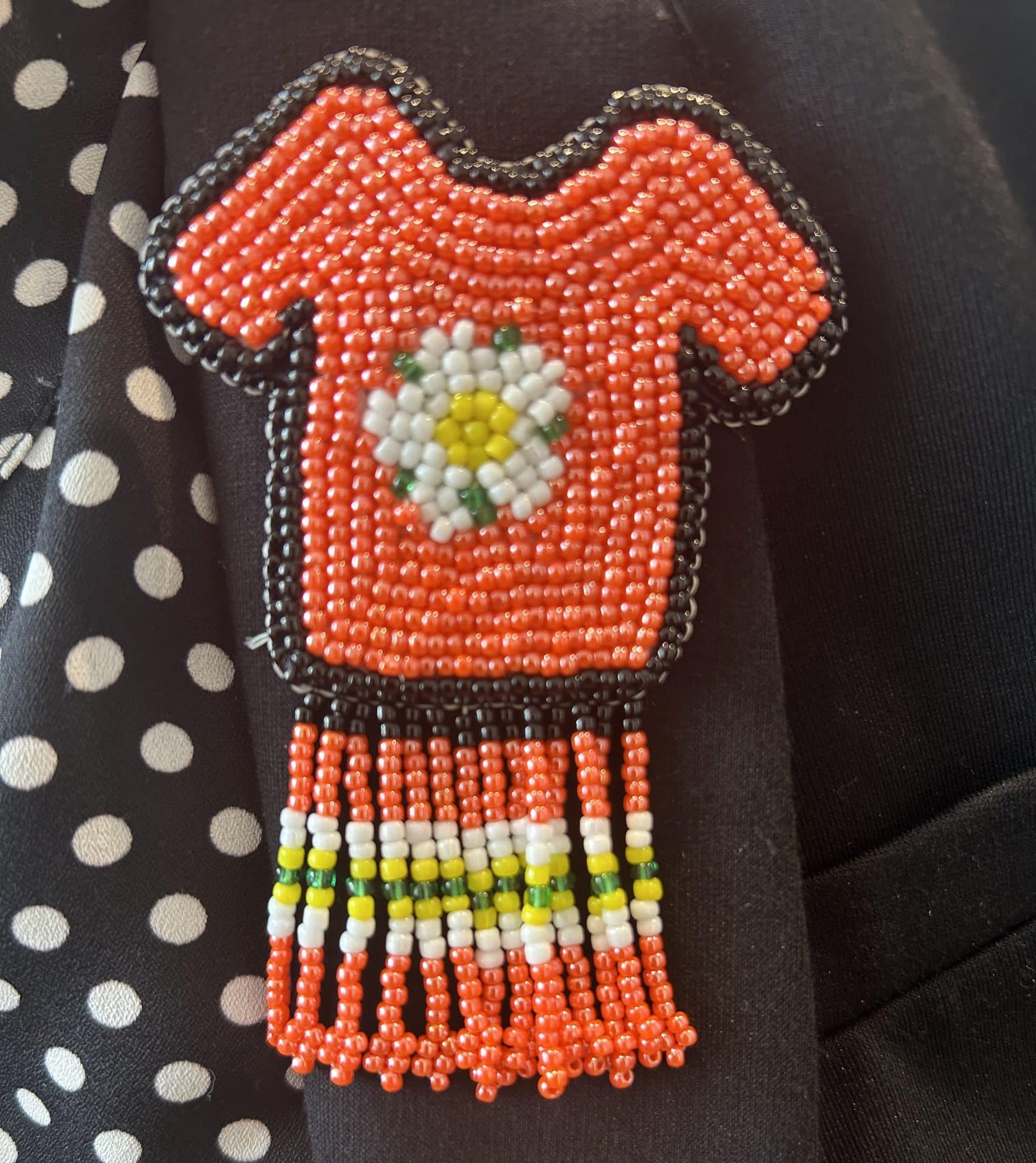
Our heartfelt thanks to Elma Moses, Women Leadership program participant and Survivor, for generously sharing the beaded brooch created by her daughter.
Four Perspectives to Move Forward Together
At First Nations Executive Education (FNEE), reconciliation is grounded in the lived stories, experiences, and visions of those who shape our programs every day. On this National Day for Truth and Reconciliation, four members of our team—Innu, Kanien’kehà:ka, Mi’gmaq, and Wendat—share their reflections on what reconciliation means today and for the future.
Ghislain Picard: Recognizing Ancestral Rights and the Land
Associate Professor at HEC Montréal and Chair of our Advisory Committee, Ghislain Picard reminds us that reconciliation demands concrete action—starting with the recognition of ancestral rights. This recognition must be paired with meaningful efforts in education and Indigenous economic development. Acknowledging these rights, and their deep connection to the land, fosters trust and healing. It not only helps repair the wounds of the past but also establishes the foundations of respectful and reciprocal relationships for generations to come.
“Reconciliation is not achieved simply through words, but through concrete actions that honour the rights, cultures, and aspirations of Indigenous peoples.”
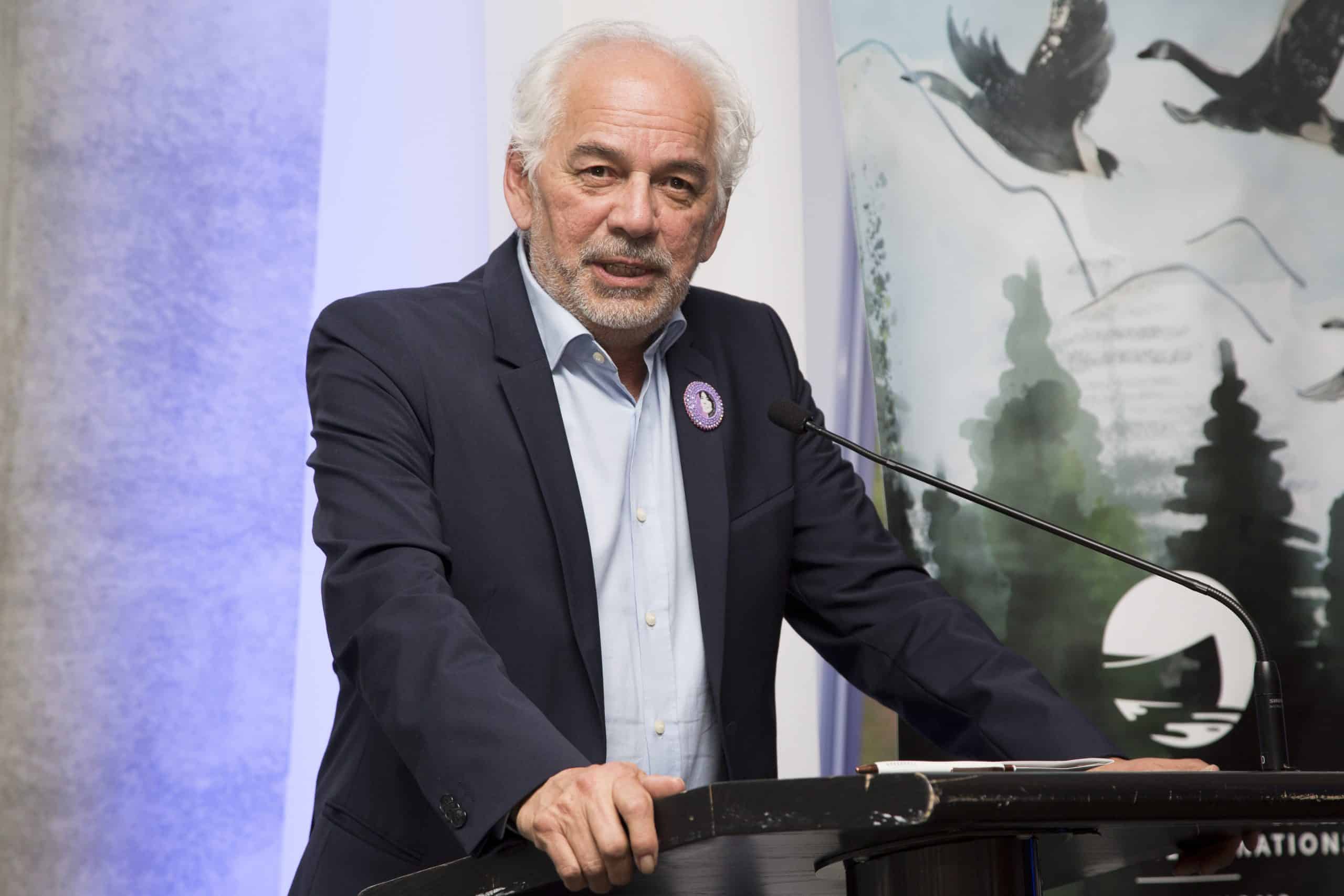
At his inaugural address as Associate Professor at HEC Montréal, Ghislain Picard wore a circular purple badge — Joyce Echaquan’s favourite colour — as a tribute and a sign of respect.
Tiohenta Lahache-McComber: Acknowledging the Truth and Mutual Respect
For Tiohenta, Participant Recruitment Advisor at FNEE and Kanien’kehà from Kahnawà:ke
”Reconciliation is not an abstract concept. It must be grounded in “an honest acknowledgement of history and rooted in mutual respect, so that it translates into concrete actions.”
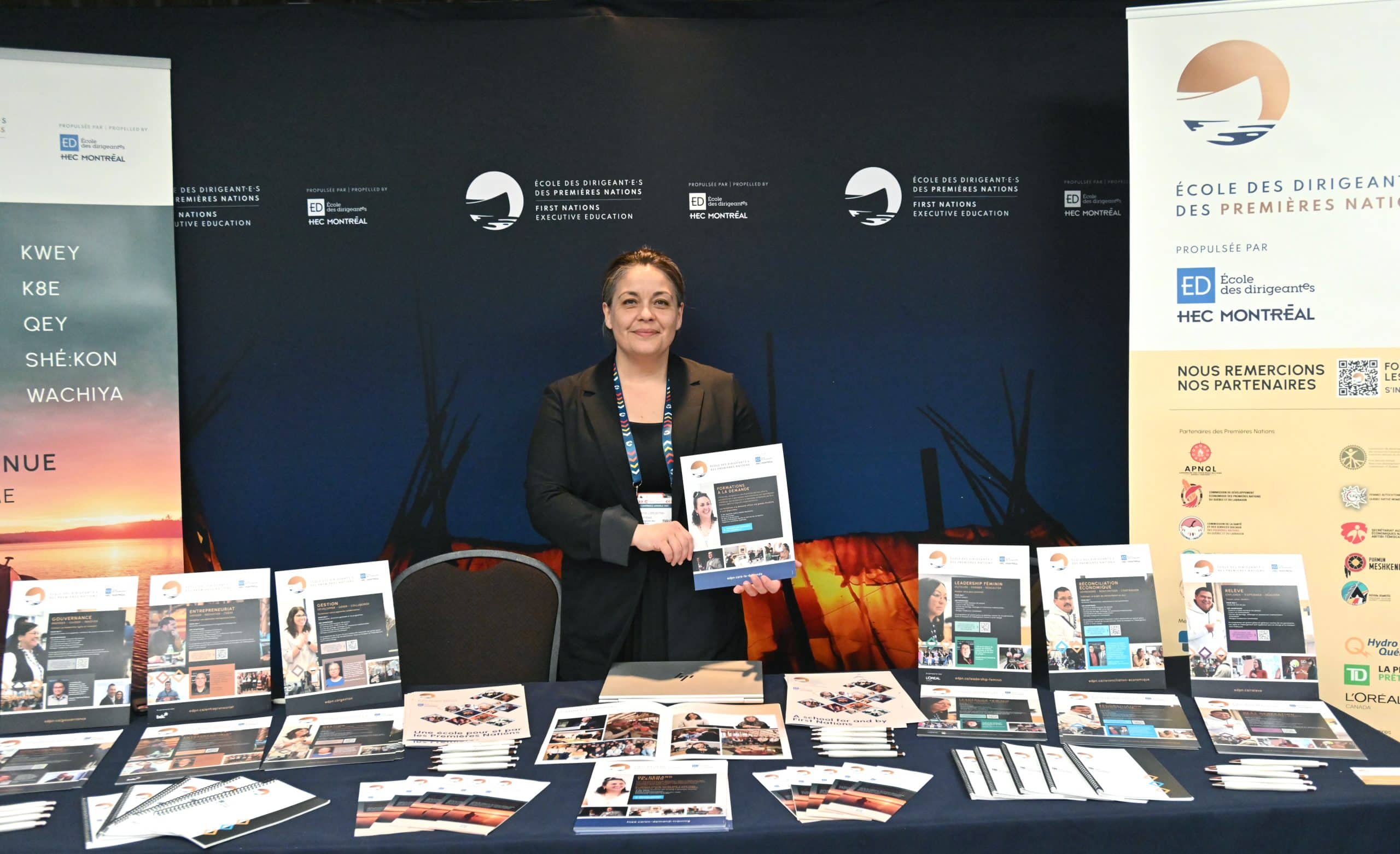
Nicky Savage-Samson: Reconciling with Oneself and Passing Knowledge to Future Generations
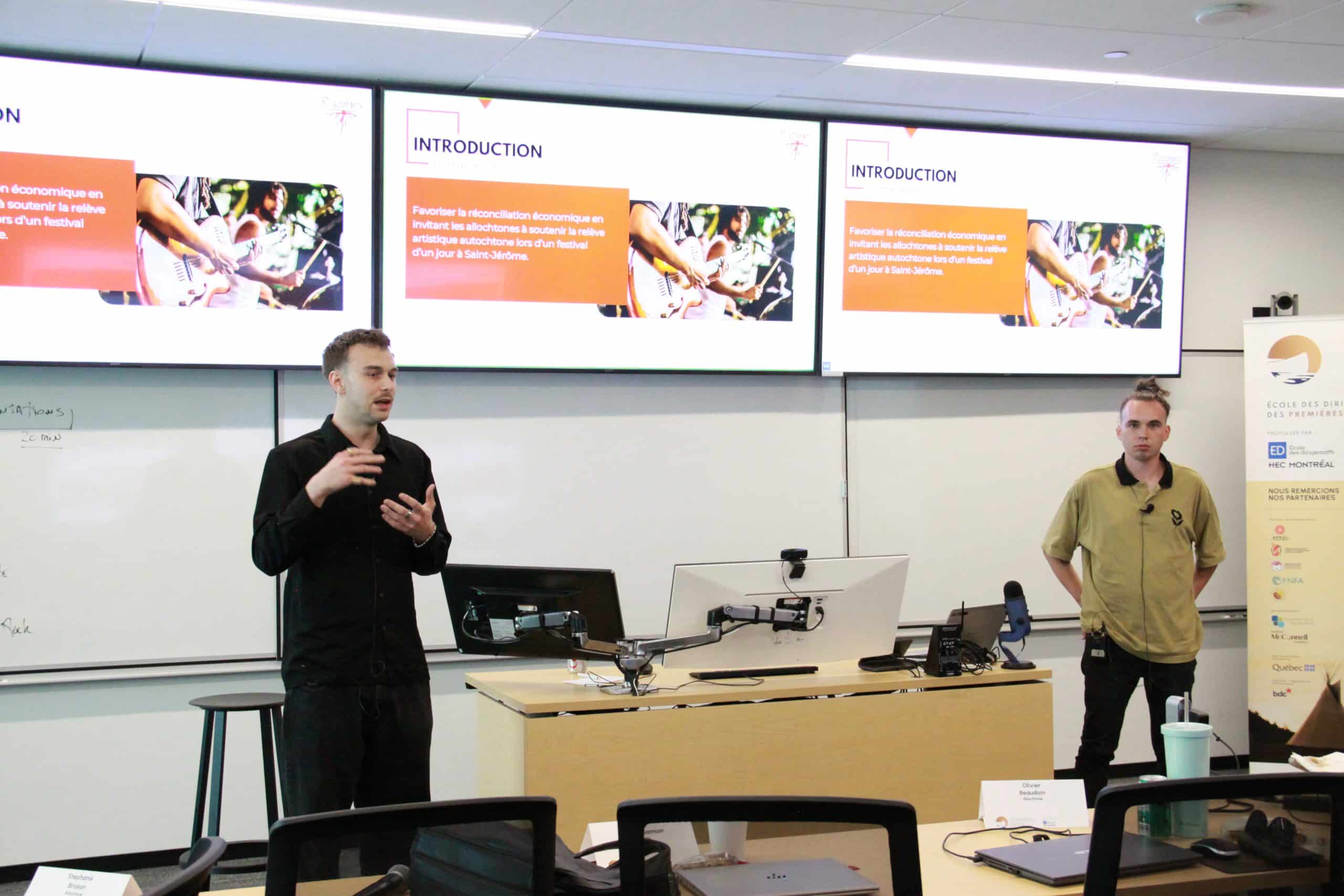
For Nicky, Project Manager and communications, Mi’gmaq from Gespeg, reconciliation is above all a personal journey of identity.
“For me, reconciliation is first and foremost very intimate. As an Indigenous person who grew up outside my community, it is a process that touches both my culture and my identity.”
Reconciliation, for him, means rediscovering his roots and gaining a deeper understanding of his cultural and family heritage in order to “piece together his personal history.”
On a collective scale, reconciliation is also about rethinking education and our relationships with the land, nature, and time. This renewed vision of education is illuminated by the teachings of Elders and the wisdom of traditional knowledge.
“We must pass this history on to our children and to future generations. By embracing these perspectives, we enrich our societies and create a future that honours both the knowledge and the values of First Peoples.”
Marc Du Sault: Actively Educating and Building Equitable Partnerships
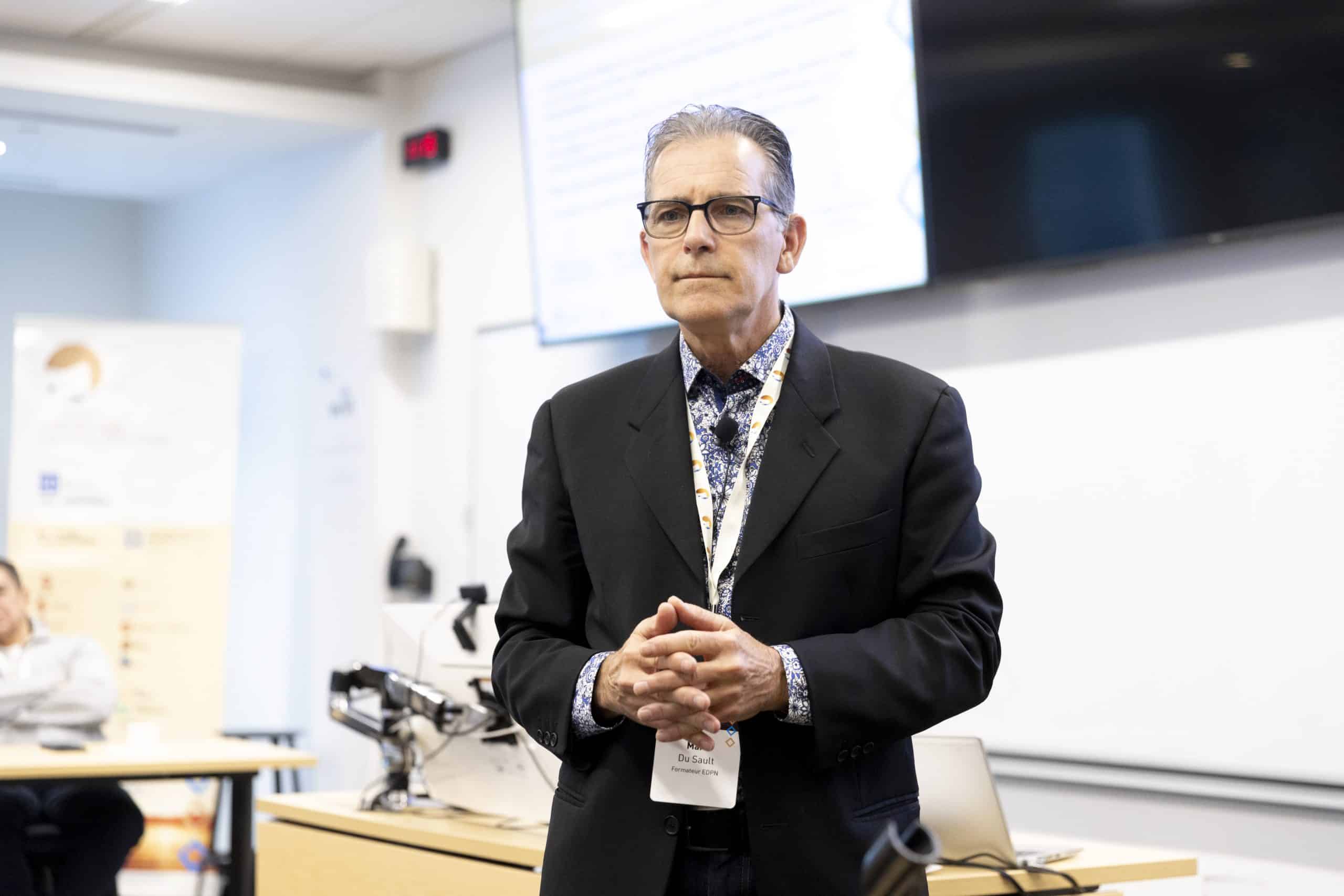 For Marc Du Sault, Co-Academic Lead of the Economic Reconciliation program and a member of the Wendat Nation, reconciliation is to be lived every day—through listening, respect, and openness.
His reflections have led him to identify four essential dimensions of reconciliation:
- Recognizing history, by amplifying Indigenous voices and perspectives.
- Acknowledging the harms and damages caused.
- Committing to repair, healing, and restitution.
- Fostering economic reconciliation, by creating concrete, equitable partnerships.
Through the Economic Reconciliation program, Marc has seen inspiring projects emerge, through the pairing of Indigenous and non-Indigenous participants. These collaborations act as powerful catalysts, carrying the spirit of reconciliation far beyond the walls of the School.
Looking ahead, Marc envisions a way to sustain and amplify this impact: systematically documenting reconciliation initiatives—“everything that has been shared, the profiles of participants, and the projects undertaken.” Such a knowledge base would strengthen new initiatives, reinforce the School’s mission, and ensure that this collective wisdom is preserved for future generations.
“This is a tangible way to bring reconciliation to life: recognizing the past, contributing to healing, and shaping a shared future where economic relationships serve as a lever for equity, dignity, and shared prosperity.”
These testimonies remind us that reconciliation takes many forms: in the personal, in education, in truth, in everyday actions, and in the building of partnerships.
At FNEE, we believe that every action, every project, and every dialogue helps to weave a shared future. On this National Day for Truth and Reconciliation 2025, we renew our commitment: to listen, to acknowledge, to learn, to transmit, and to build—together—a school and a society rooted in mutual respect and reciprocal trust.
Please do not hesitate to reach out to the support services available if you or someone close to you is in need:
- Hope for Wellness Help Line for Indigenous Peoples in Canada: 1-855-242-3310 or via online chat at hopeforwellness.ca
- Indian Residential Schools Crisis Line: 1-866-925-4419

