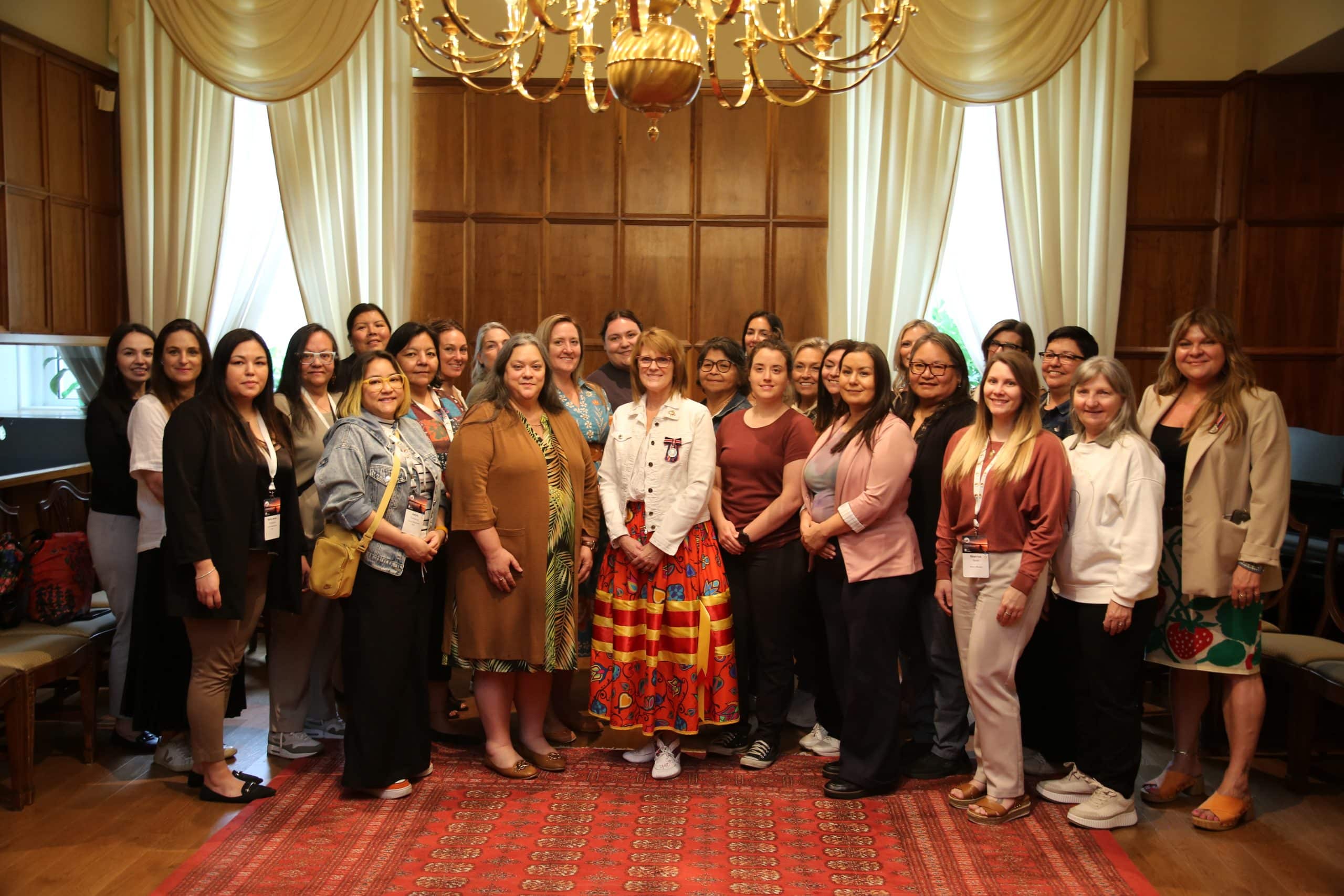
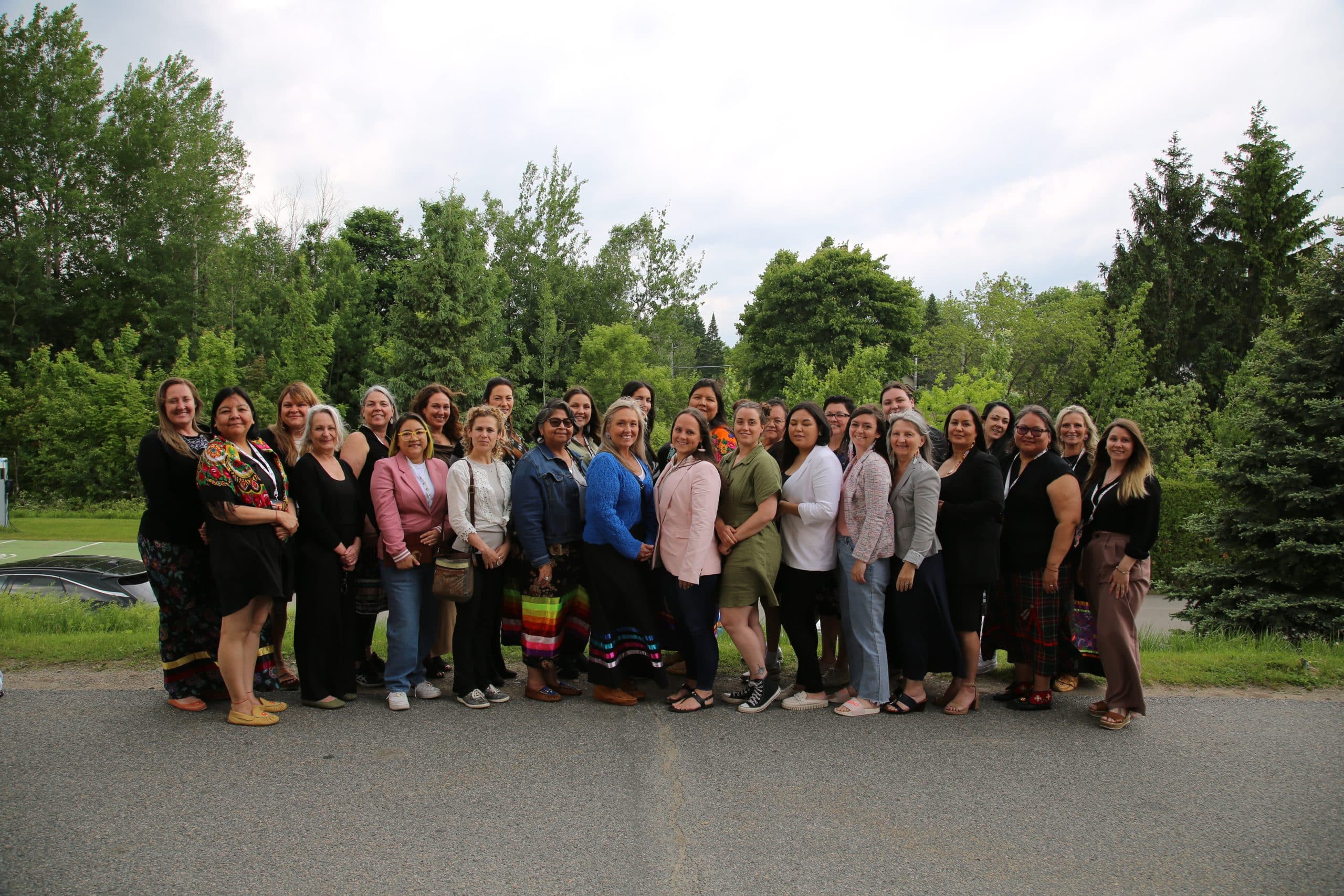
At the heart of the Women Leadership program, each Indigenous and non-Indigenous teaching duo embodies a unique academic approach rooted in co-creation where perspectives intersect and knowledge systems complement one another. Together, they create learning spaces that foster individual transformation and collective empowerment.
Discover our duos :
The Distinctiveness of Women Leadership
Brigitte Skeene, an Innu from Mashteuiatsh and co-lead of the Women Leadership Program, expresses it clearly:
“Women bring a unique approach to leadership, grounded in listening, collaboration, and long-term vision.”
The program embraces this perspective by creating spaces that prioritize:
- Sharing circles, encouraging authentic and respectful dialogue
- Time for personal reflection and introspection
- Practical workshops, such as public speaking exercises
By fostering a culture of listening, sharing and action, the program creates the conditions for each participant to express and fully develop their leadership potential. This same spirit is embodied in the co-facilitation model, where each duo brings interwoven perspectives to life.
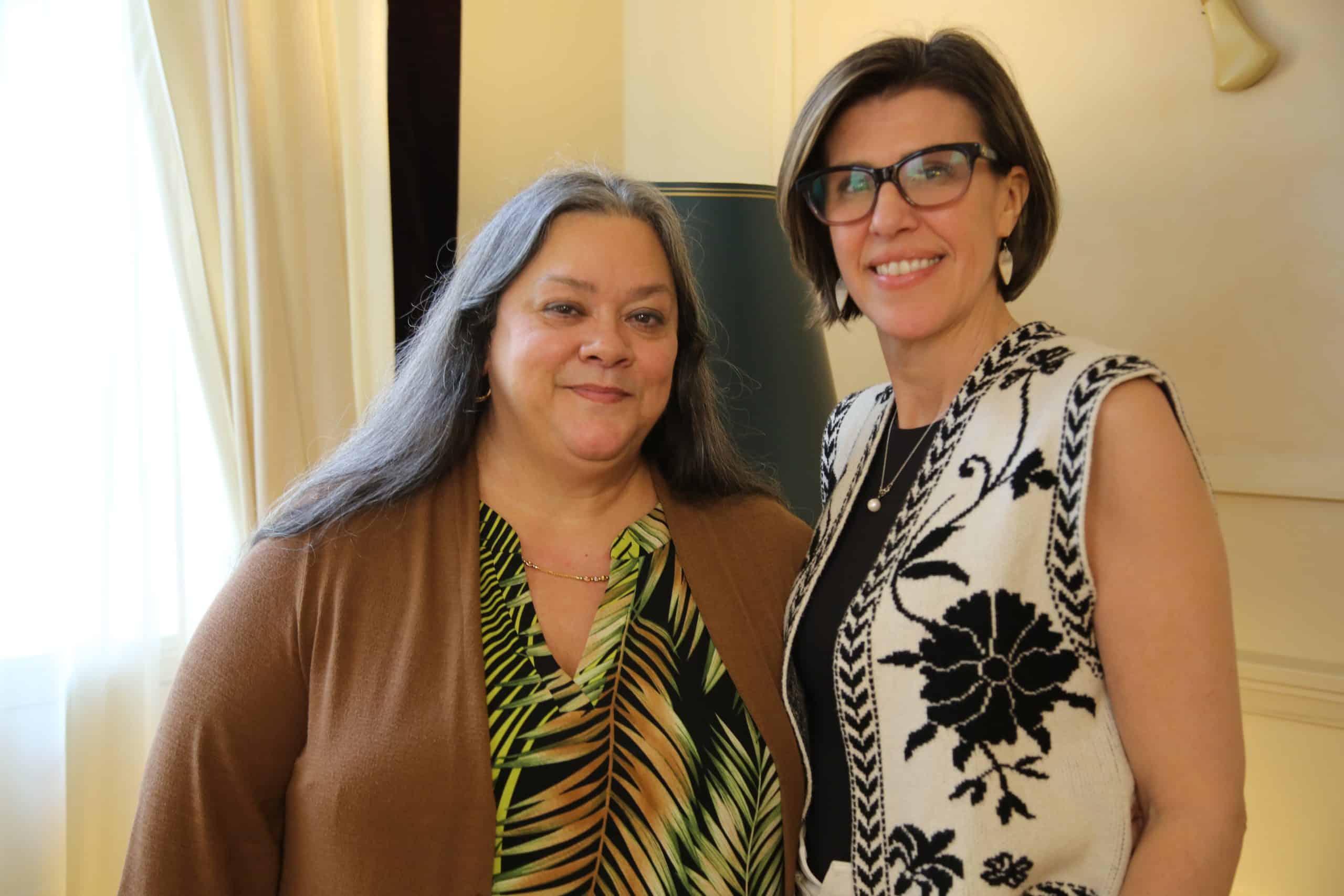
Raymonde Lévesque and Brigitte Skeene, academic co-leads of the Women Leadership Program.
With over 25 years of experience in Human Resources, Brigitte Skeene draws on her Innu roots and expertise in intercultural facilitation to support participants with authenticity, active listening, and a commitment to co-creation.
The Strength of Co-Creation
Victoria LaBillois, a Mi’gmaq from Listuguj, co-facilitates the workshop How to Tell a Powerful Story alongside strategist Sandra Chaput-Carrier. She highlights how co-creation deeply enriches the learning experience:
- By allowing participants to see the world through two complementary lenses (Two-Eyed Seeing)
- By offering strong role models and building social capital between Nations
- By recognizing and validating Indigenous knowledge that participants already hold
- By grounding the content in lived Indigenous realities, enabling meaningful application in communities and organizations
“Participants have added value of sharing two world views in the delivery of material. That is, an Indigenous perspective in addition to the academic Western perspective. This is bringing the concept of Two-eyed Seeing, introduced by Dr. Albert Marshall, et al into the classroom. Participants also gain access to Indigenous leadership that supports this model of co-creation, which helps to build social capital amongst the various Indigenous Nations and strengthens role modeling. Participants are supported in both their learning and growth by having Indigenous knowledges and worldviews held up alongside existing curriculum. This serves to validate the participants existing knowledge systems and to recognize their unique and tremendous value. I also use the opportunity to put the material into an Indigenous context and use real examples to help participants better understand what they are learning and see how it can apply across our own communities and organizations.” — Victoria LaBillois
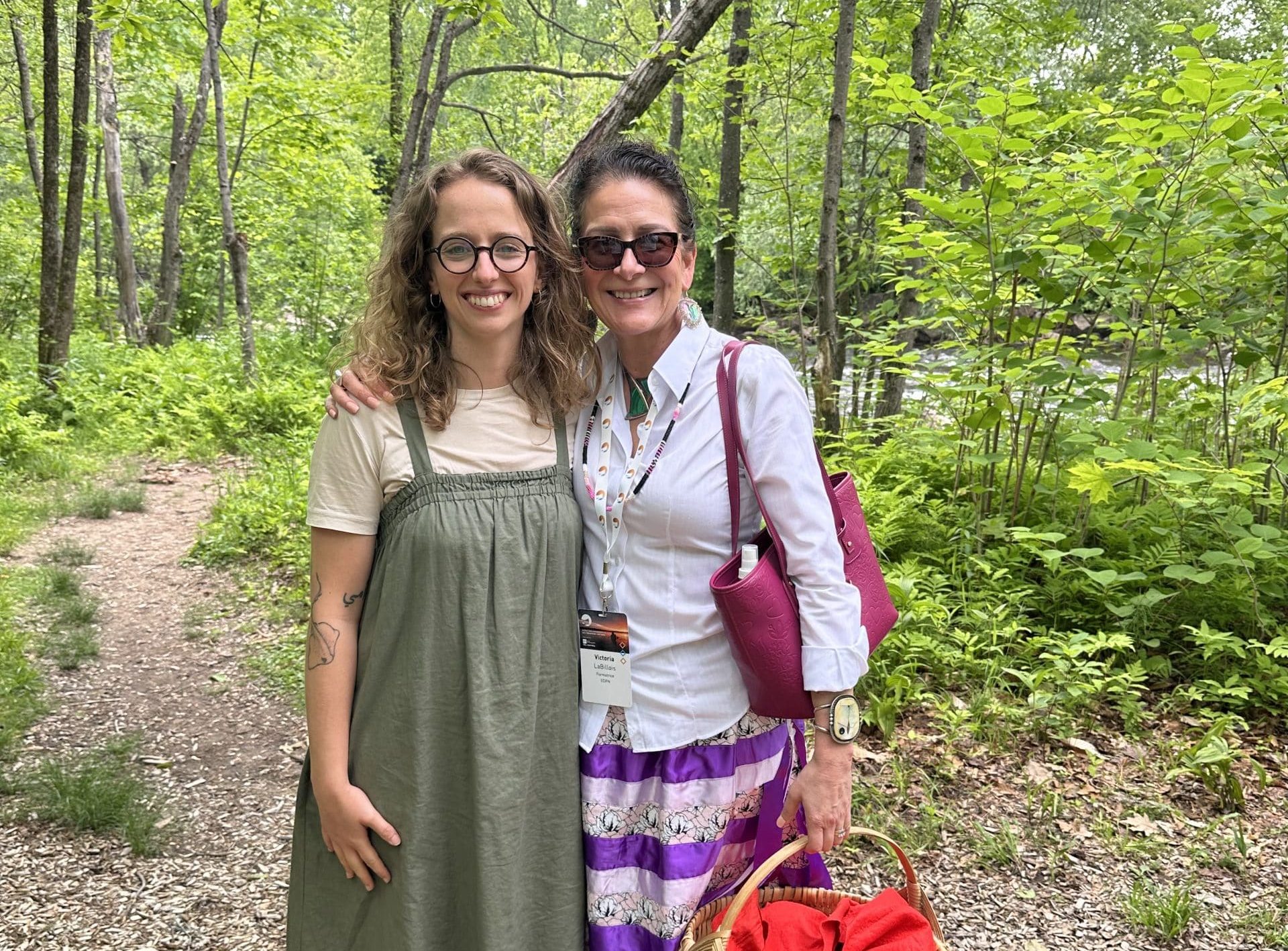
Sandra Chaput-Carrier and Victoria LaBillois during a storytelling session.
A recognized Mi’gmaq entrepreneur and economic leader, Victoria LaBillois is Vice-President of the National Indigenous Economic Development Board. She actively contributes to Economic Reconciliation by sharing a vision of leadership rooted in Indigenous knowledge and entrepreneurship.
The Collective Power of Co-Creation
Josée Lortie, visiting professor in the Department of Management at HEC Montréal, co-leads several workshops with Nadia Robertson, a Mi’gmaq from Gespeg and advisor to the Women Leadership Program. Together, they help participants deepen their self-awareness and better understand their own communication styles.
For Josée, co-creation is not just a teaching approach, it’s a dynamic process that spreads through the entire group. The true strength of the program lies in this collective co-creation, which transforms the learning environment into a shared and participatory space.
“To co-facilitate is to embody a logic of co-creation that permeates the group. Guidance no longer happens in front of the group — it happens with them, through a living and collective process.”
— Josée Lortie
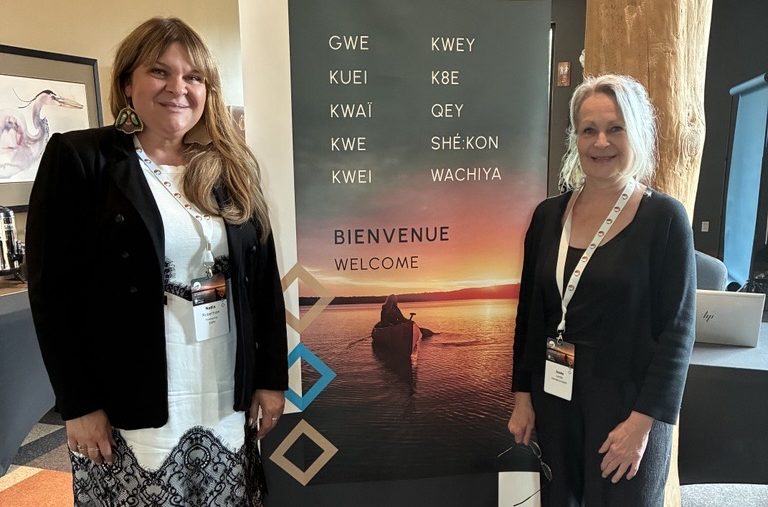
Josée Lortie and Nadia Robertson during a workshop on self-knowledge and communication styles.
Josée Lortie holds a Ph.D. in administration. With nearly 25 years of entrepreneurial experience in gastronomy and a strong academic background, she brings both practical insight and critical thought to leadership in hierarchical and intercultural contexts.