

First Economic Reconciliation cohort
This summer, the first cohort of the Economic Reconciliation program completed six months of training filled with discoveries, learning and connections!
The strength of this program lies in the exceptional diversity of projects led by Indigenous and non-Indigenous duos, in terms of their scope, impact, and target audiences.
From September 16 to 27, discover one project per day. Join us each on this page for your daily dose of inspiration in economic reconciliation.
Small Circles Becoming a Larger Circle
This is the image used by Marc Du Sault, a Huron-Wendat instructor, co-academic director of the Economic Reconciliation program, and lecturer at HEC, to describe the synergy and connection that start within Indigenous and non-Indigenous pairs, and then expand between them, eventually forming a larger circle of reconciliation.
Developing Indigenous FabLabs to stimulate social and technological innovation among First Nations by Viviane Michel and Céline Auclair.
Viviane Michel, an Innu from Uashat mak Mani-Utenam, and Céline Auclair, a non-Indigenous person from Gatineau, have launched a project inspired by Indigenous Fablabs to showcase the digital skills of young Indigenous people to employers. Their initiative promotes the integration of talents with unconventional backgrounds and encourages diversity. This social and technological innovation project for Indigenous Peoples, both in urban and community settings, aims to foster genuine and lasting reconciliation by strengthening cultural pride.
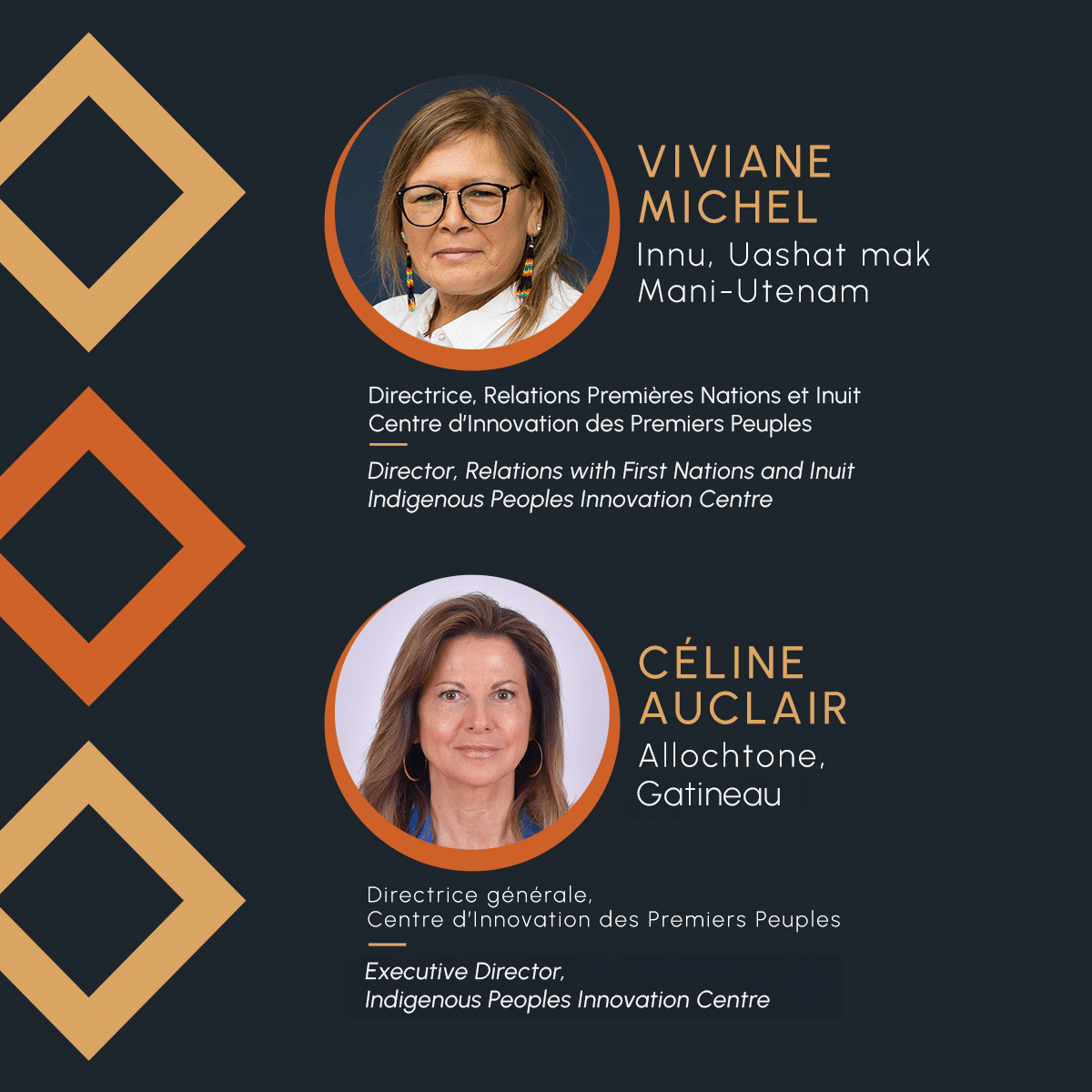
“We aim to create synergy between non-Indigenous employers and young Indigenous people through the Fablabs at the First Peoples Innovation Center to enhance the skills of the next generation for future economic growth.”
Founding an Intergenerational House in Unamen-Shipu by Raymond Bellefleur and Bradley Bacon
Raymond Bellefleur and Bradley Bacon, both Innu from Unamen Shipu, are collaborating to create an intergenerational house that will offer various services, including rooms for people experiencing homelessness, training on Innu realities, legal support, therapies and healing sessions. This project was initiated following the tragic loss of two young men who died of hypothermia in 2022 and 2023 in the Unamen Shipu community.

“Our intergenerational house project in Unamen Shipu will help prevent tragic deaths and honour the memory of two young men from the community.”
Creating an Economic Impact Committee for the Huron-Wendat Nation within Hydro-Québec Projects by Charles Desmers and Camille Laberge
Charles Desmers, a Wendat from Wendake, and Camille Laberge, a non-Indigenous resident of Montréal, have developed a project for an economic impact committee for the Huron-Wendat Nation within Hydro-Québec projects, with the aim of enhancing the integration of Indigenous businesses.

“United in our quest for economic reconciliation, Charles, Coordinator of Business and Strategic Partnerships for the Huron-Wendat Nation, and Camille, Chief of Strategic Procurement at Hydro-Québec, are building a bridge towards harmony, where the flows of energy and culture meet to illuminate a future of shared prosperity and mutual respect.”
To learn more about Charles and Camilles’s project, read the article published on September 4, 2024.
Providing Nomadic Camps for Indigenous Youth Across the Territory by Marie-Claude Cleary and Eric Deschênes
Marie-Claude Cleary, an Innu from Mashteuiatsh, and Eric Deschênes, a non-Indigenous person from Montréal, have joined forces to launch an ambitious economic reconciliation project with the New Pathways Foundation and Toboggan & Co. Foundation. Their vision: to offer Quebec’s Indigenous youth nomadic camps that promote personal growth and cultural empowerment, while honouring and celebrating First Nations traditions and heroes over a five-year period.
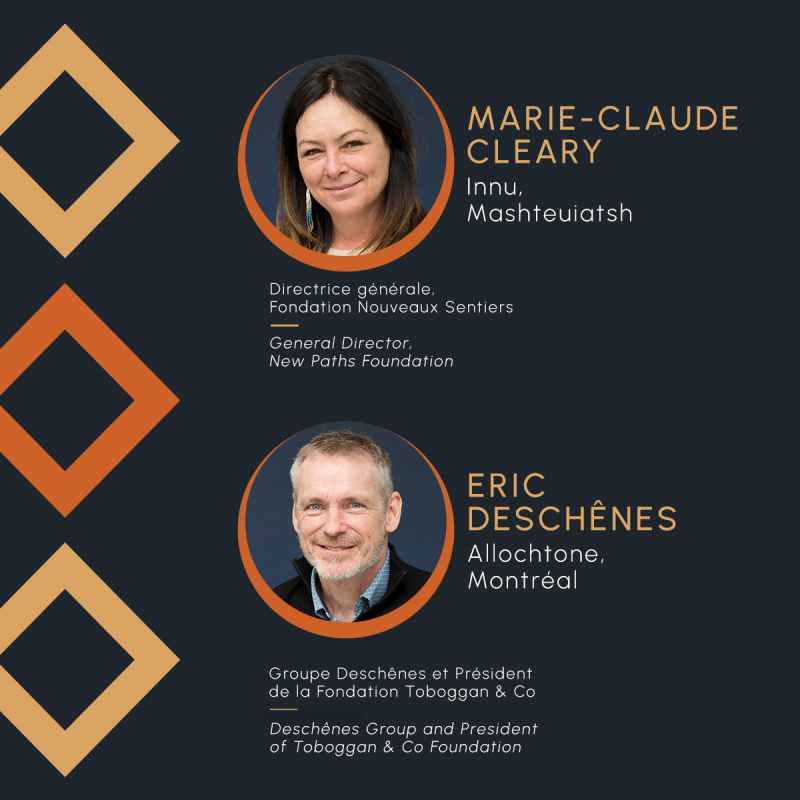
“Reciprocity is essential. Taking on an approach of listening and learning, through a perspective of knowledge transfer, while recognizing cultural differences. Self-determination in philanthropy is driven by First Nations leadership. We need to have the means to rely on solutions that come from First Nations, from communities themselves, to address the collective issues we identify as most urgent. This contrasts with solutions conceived and imported from an external system.”
To learn more about Marie-Claude and Eric’s project, read the article published on August 9, 2024.
Imagining a bilingual coloring book – Wendat/French by Carling Sioui and Élisabeth Petit
Carling Sioui, a Wendat from Wendake and Élisabeth Petit, an non-Indigenous person from Québec, have joined forces to create a bilingual Wendat/French colouring book. This inspiring initiative celebrates Wendat culture by making it accessible to all, using a playful, educational tool that bridges generations and cultures, and deepens the appreciation of Indigenous heritage.
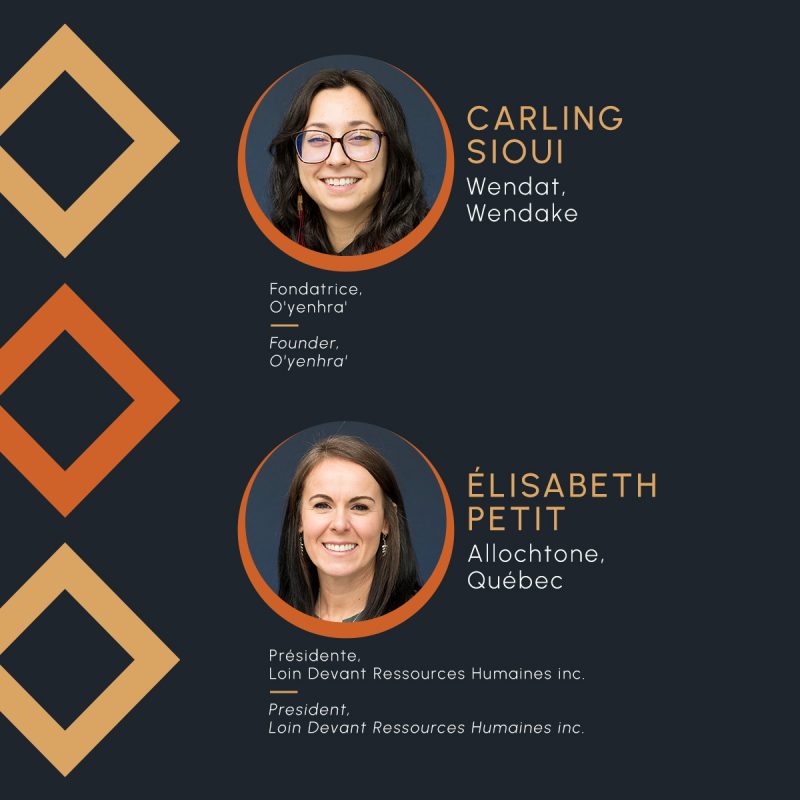
“By embracing truth and weaving together our entrepreneurial and cultural knowledge, we are building the foundations of solid economic reconciliation, where opportunities multiply, and barriers crumble. In this joint project, we forge lasting bonds, turning the scars of the past into drivers of innovation and prosperity.”
To learn more about Carling and Élisabeth’s project, read the article published on September 12, 2024.
Becoming a key supplier of ammonium nitrate in the Sept-Îles region by Kenny Régis and Peter Dinet.
Kenny Régis, an Innu from Uashat mak Mani-Utenam, and Peter, a non-Indigenous resident of Sept-Îles, have taken the opportunity to forge an industrial partnership in Sept-Îles through the Economic Reconciliation program. Their goal is to become a top supplier of ammonium nitrate for the region. This ambitious project paves the way for decarbonization, improved road safety and creating high-quality employment.
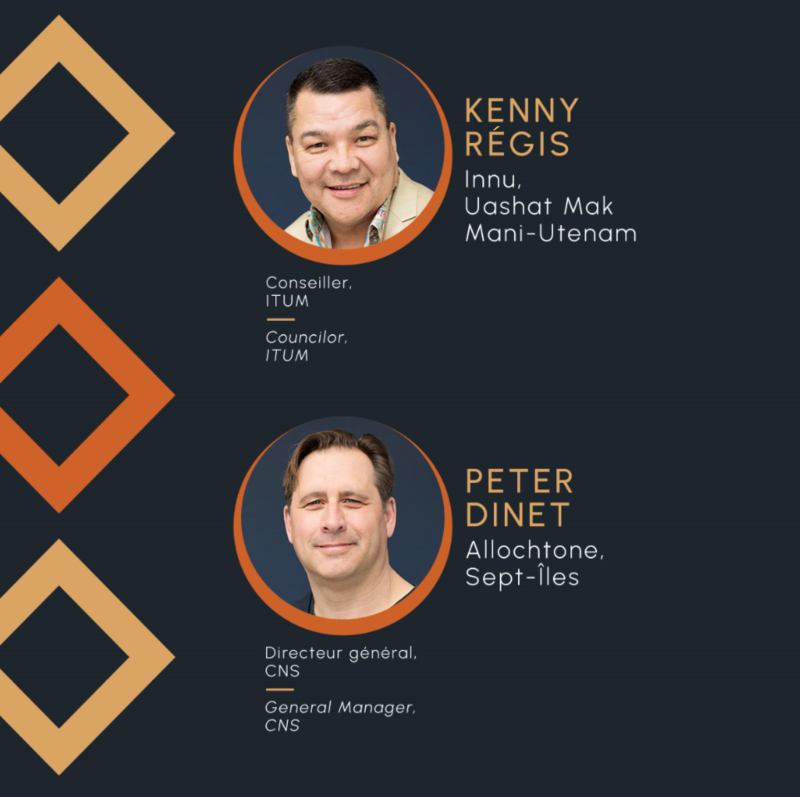
“It’s all about lending a hand.”
Strengthening Relationships Between First Nations and Hydro-Québec by Alain Bédard and Émilie Sénéchal
Alain, a Wendat from Wendake, and Émilie, a non-Indigenous person based in Montreal, have explored sustainable and thoughtful collaboration opportunities between their two organizations, the First Nations of Quebec and Labrador Sustainable Development Institute (FNQLSDI) and Hydro-Québec. Their areas of focus include the restoration and enhancement of natural environments, energy transition and efficiency, as well as skills development in the energy sector.

“We had the opportunity to engage in a meaningful space where we could get to know each other, gain a deeper understanding of our organizations, our unique realities, and respective challenges. This has allowed us to establish the foundation for a long-lasting collaboration.”
Producing roasted wood chips by Adam Jourdain and Félix Grenier
Adam, an Innu from Uashat mak Mani-Utenam, and Félix, a non-Indigenous resident of Quebec, have combined their skills to set up a torrefied wood chip production plant in one of Quebec’s forest regions. This project has a major financial and economic impact, and is being carried out in collaboration with local Indigenous communities. The Economic Reconciliation program has enabled the duo to build relationships of trust, gain an understanding of the specific contexts of Indigenous communities and prepare for future partnerships.

“Working in pairs has enabled us to gain a better understanding of each other’s business cultures and to work together to develop transformative projects for communities.”
Acquiring a Salmon Smokehouse by Roberto Wapistan and Elisabeth Quirion
The couple formed by Roberto, an Innu from Nutashkuan, and Elisabeth, a non-Indigenous person from Lévis, illustrates the complementarity of working as a duo. Together, they aim to purchase a salmon smokehouse to highlight valuable Indigenous expertise, combined with the teachings received at FNEE. In the long term, they plan to create jobs for the community.

“Working in pairs has allowed us to showcase our complementary strengths and create a project enriched by our cultural exchanges.”
- → Discover the Economic Reconciliation program

